
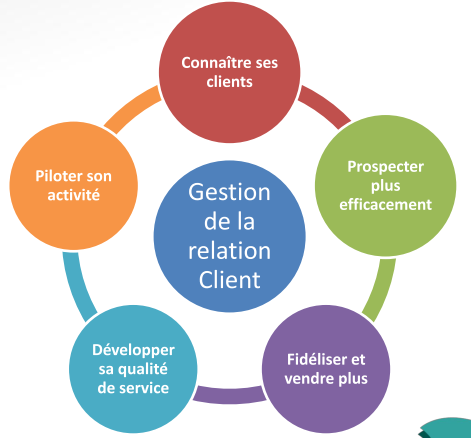
A software of Customer Relationship Management (GRC / CRM) – Customer Relationship Management in English or CRM – is a customer database that allows a company to have a clear and constant vision of its customers and future customers (prospects).
It therefore represents all the tools that make it possible toidentify prospects, then treat, analyze and retain customers.
The aim being to subsequently ensure a personalized follow-up, offering the best quality service possible.
This tool therefore makes it possible to place the customer at the heart of the company, by listening to them and having a better knowledge on their expectations and needs.
It also allows better target its customers, optimize their working time while increasing responsiveness of the company and boosting your productivity.
Why use Customer Relationship Management software (CRM / CRM)?
Increase customer satisfaction
- Be more efficient in commercial procedures (by better managing your after-sales service, by being more responsive and intervening at an appropriate time),
- Have a greater proximity with the customer by developing a special relationship with them (by recording their preferences, their birthday for example, etc.),
- Develop your competitiveness by providing more personalized services and advice.
Increase business profitability
- Increase sales thanks to targeted actions on defined segments of your customers and prospects (Ex: building customer loyalty through specific offers based on each customer population),
- Optimize profitability sales, marketing and customer service investments thanks to better calculation of return on investment,
- Have a clear vision commercial activity to optimize processes (report on sales, monitoring of sales representatives' appointments, progress of objectives, etc.),
- Save time by automating recurring tasks (monitoring automatic results, automatic follow-up to customers, etc.).
Improve internal organization
- Agenda shared between employees (tasks to do, events, etc.),
- Centralization and sharing of all customer data (all important customer information is classified in one place and easily accessible),
- Structuring the information and business processes. You have a structured customer file with relevant information that can be used for marketing actions (e.g. paper mailing, e-mailing, phoning, etc.),
- Keep history of your customer data (Ex: if a salesperson leaves, you do not lose information and you can easily transfer current files to their replacement).