

Le specifications is a valuable tool when you are about to start a project.
Whether you plan to launch your website, a mobile application, to make a redesign, or any other digital project, establishing specifications is the first essential step in a successful project.
To help you master writing at your fingertips, we explain in this article what is a specification, what is its use and what are the different types (functional specifications and technical specifications).
We also offer you our specifications template, to help you write yours.
Do not neglect this step because of the writing time it may represent: it allows you to gain efficiency subsequently, to clearly outline the outline of the project, anticipate difficulties and avoid errors.
Specifications: definition
What are specifications?
The specifications are a document which defines the framework of a project as a whole. The needs, the objectives, constraints, features expected, deadlines and budget are formalized in the most precise way possible.
Used internally or externally, it can become contractual in the case of signing a service, and it is mandatory in the case of a call for tenders.
What is a specification for?
The specifications allow:
- de think about your goals and define them. You will then be able to determine the elements that must be present to respond to them;
- to define priorities of the project ;
- d’help the interlocutors to advise you as best as possible;
- d’estimate the budget and deadlines necessary for the successful completion of the project.
Concretely, the specifications will serve as a basis for planning and project management.
Who should write specifications?
Ideally, the specifications for a project should be written by the company that initiated it. It can be the project manager or the project owner and this makes it possible to:
- better reflect the corporate culture and its values than an outside person,
- to stay as close as possible to the need of the end user.
Do not hesitate to surround yourself with experts who can advise you, but also to collect information from end users, because it will be them, after all, who will use the solution.
However, if you call on a service provider external, like an web agency, to create your specifications, you will only have to validate the different elements and ensure that the perimeter is well covered.
How to draw up specifications?
Step 1: functional analysis
Before starting to write the specifications, a preliminary functional analysis must be carried out. It first makes it possible to clearly identify the need, and then translate it into functionalities.
To do this, we recommend two easy-to-use tools: the horned beast and the octopus diagram.
The horned beast
The horned beast helps define the need by answering these questions:
- Who is the product or service useful to? It's the end user.
- What does he act on? We are talking about the environment here.
- For what purpose? This is the need.
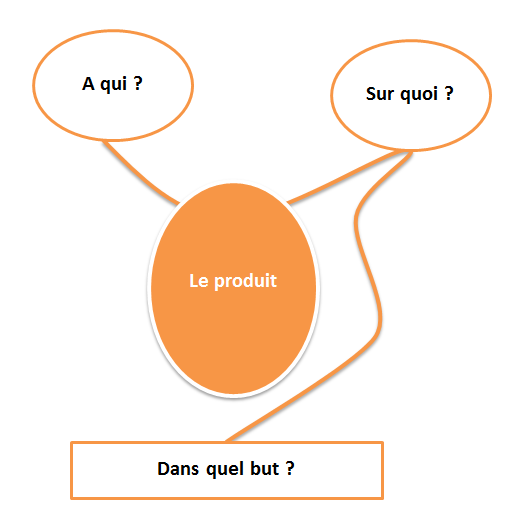
Let's take a simple example, a bedside lamp:
- it provides a service to its user;
- it affects the brightness of the room;
- its purpose is to illuminate the room.
Once the need is defined, we can deduce features.
The octopus diagram
This tool will help us to deduce the functionalities necessary to meet the previously defined need:
- les main functions (FP) which directly respond to the need;
- les constrained functions (FC) which meet secondary needs which may be linked to ergonomics, aesthetics, price or environmental impact.
Let’s continue with the example of the bedside lamp.
The different functions can be defined as follows:
- FP1: illuminate the user’s room;
- FC1: do not dazzle the user;
- FC2: offer a modern and pleasant design;
- FC3: be easy to use;
- FC4: have a competitive price;
- FC5: do not consume too much energy.
Here's how to model them with the octopus diagram.

Step no. 2: the functional specifications
Le functional specifications aims to draw the outlines of a project. It allows you to define the needs that the future product will have to meet, in terms of functionalities.
It will subsequently be transmitted to serve as a basis for the technical specifications, which reflect the needs functional en specifications techniques.
Very often, the functional and technical specifications are found in the same overall document, but they can also be written separately.
Step 3: the technical specifications
The technical specifications emphasize the technical part of the project. It translates the needs functional in technical requirements, and highlights the different constraints.
This document is essential to the work of developers, in order to maximize the chances of meeting their needs precisely.
Specifications: example
Here is a specifications template in 10 steps:
- Presentation of the company,
- Presentation of the project,
- Target,
- Competition,
- Graphic and ergonomic charter,
- Budget envelope,
- Completion deadlines,
- Functional specifications,
- Technical specifications,
- Appendices.
This example of specifications must of course be adapted according to your project and its complexity.
1. Company presentation
This first part allows you to quickly describe the company so that the external service provider clearly understands the identity of its client:
- sector of activity,
- core business,
- flagship products or services,
- interlocutors.
It is not necessary to be exhaustive, just list the essential information about your business so that a person can understand in a few lines its reason for being (his why).
2. Presentation of the project
- the context
What needs should it meet? Why did these emerge and how? Who will this be useful to? The aim here is to make people understand the ins and outs of the project, so that all those involved in it understand the issues and work to respond to them as best they can.
- the objectives
The same type of project can hide different intentions and objectives. This is why it is essential to know them in order to move in the right direction and make the right decisions.
A good goal is a SMART goal:
- Specific (clearly defined),
- Measurable (quantifiable),
- Achievable (necessary resources available),
- Realistic (relevant),
- Temporally defined (set a deadline)
© Inbound value
- the perimeter
Does the project concern a company? A group? Is the impact regional, departmental, national or international? Does it involve the use of several languages?
- existing elements
Here, you can include existing elements, useful for the realization: previous versions, models, presentation documents, domain name, etc.
- the scope of the project
Knowing the scope of the project allows you to take informed decisions and better adapted. We will not offer the same e-commerce platform depending on the volume of traffic expected or the number of products offered.
Read also: Understanding RFID technology
3. Target
The more precisely you can describe your target (or targets), the more likely you are to achieve it. This is an exercise that is not easy to carry out, but which will help you will save a lot of time, once the work is done.
Describe your marketing persona, namely the fictitious typical profile of your ideal customer, with maximum information:
- first name,
- age,
- personal situation,
- profession,
- salary,
- centers of interest,
- questions, problems encountered, constraints,
- extracts from written or spoken sentences, type of vocabulary used.
To glean this information, you can:
- ask questions of your customers;
- analyze information from your prospects;
- read discussions on forums dealing with their problems;
- collect more precise information on contact or download forms.
4. Competition
In order to succeed in your positioning, you must know your competitors:
- main,
- secondary,
- their strengths and weaknesses,
- your differentiating elements compared to them.
Then, you are free to determine your positioning by offering something fundamentally new, or similar, but better meeting the needs of the target.
5. Graphic and ergonomic charter
This part is useful to write when you already have a graphic charter, and you want to keep it for the project or create a new one, but that it is in agreement with this one.
You can display the following elements:
- logo,
- typography,
- colors,
- etc.
6. Budget envelope
Providing an estimate of the overall budget helps guide potential providers for the preparation of their quotes.
Be careful not to underestimate it, and that it is consistent with your requests.
7. Completion deadlines
Determine the deadline when the project should be launched.
As with the budget, do not underestimate the time needed to complete each element, and be realistic.
💡Good to know: the delivery date of the specifications may be included in a quote or an invoice and become contractual.
For complex projects, do not hesitate to set different milestones and propose a schedule in the form of a Gantt chart.
8. Functional specifications
- Features
The functional part of the specifications aims to translate the needs into functionalities.
The more you detail this part, the less the functionalities will be subject to interpretation and the more the deliverables will come close to what you want.
Describe every feature as follows:
- title,
- objective,
- description,
- sub-functionalities,
- constraints and management rules,
- priority level.
- The tree
If your project concerns a site internet or a mobile app, propose in the specifications your vision of thetree structure :
- categories,
- subcategories,
- navigation,
- organization.
- The content
List here the different types of content that may appear there, such as:
- blog posts,
- videos,
- pictures,
- documents to download.
Do not hesitate to provide details on how you would like them to be presented and managed.
9. Technical specifications
The technical part of the specifications consists of describing how the features, which meet the expressed need, will be carried out.
It highlights the technical requirements and constraints of the project to meet needs, and also mentions preferences.
Here is a non-exhaustive list of elements that can be addressed:
- online payment methods,
- hosting solution,
- server architecture,
- choice of platform or CMS,
- administration tools,
- integration constraints,
- computer language,
- data security management,
- maintenance,
- migration,
- compatibility with browsers,
- etc.
10. Appendices
Put here all the documents useful for thinking about or carrying out the project, such as wireframes, models, mock-ups, drafts, etc.
Specifications and agility to anticipate developments
Le specifications is essential to give a framework to your project, and help you think and formalize your needs and objectives. It allows them to be communicated to the different stakeholders of the project, so that everyone can make informed decisions in their work and offer solutions to answer it as best as possible.
However, it is necessary accept that the project can evolve, either because new external elements come to change the situation, or because it is difficult to be exhaustive and perfectly precise in expressing your needs.
This is where working with an agile method is interesting, because it allows you to present a functional version of the product as soon as possible, in order to be able to make adjustments to the specifications during the project.