
RFID Morocco: Definition and operation
RFID Morocco (Radio Frequency Identification) is a wireless technology that makes it possible to identify and track objects remotely through the use of radio waves. It mainly consists of two elements: an RFID label (or tag) and an RFID reader.
Definition of RFID Tag
An RFID tag is a small electronic device that receives and transmits information via radio waves. There are several types of RFID tags:
- Passives : They have no internal battery and are activated by the energy emitted by an RFID reader.
- Active : They have a built-in battery, which allows them to emit a continuous signal.
- Semi-passive : A combination of the two, they use a battery to power the internal circuitry but require a reader signal to transmit data.
How RFID works
The RFID reader emits a radio signal that activates nearby RFID tags. Once activated, the tag sends a response containing stored data, such as the unique object identifier. This data is then transmitted to the management system for processing.
The operating steps of RFID:
- Signal emission : The reader sends a radio frequency wave.
- Label activation : The tag receives energy or signal from the reader.
- Data transmission : The tag sends its unique identifier or other information to the reader.
- Receipt and processing : The reader receives the data and transmits it to a central system for analysis.
Use of RFID in logistics
RFID is particularly useful in the field of logistics for several reasons:
- Real-time tracking goods.
- Reduction of errors inventory management.
- Improved traceability products.
- Process optimization storage and distribution.
The adoption of RFID allows logistics companies to better manage their flow of goods, speed up order processing, and minimize losses. Therefore, RFID is an indispensable technology for modern logistics in Morocco.
The advantages of RFID Morocco for logistics

RFID (Radio Frequency Identification) technology offers several significant advantages for the logistics sector in Morocco. There are various ways that businesses can improve their operations by integrating this technology.
Accurate tracking of goods
RFID enables real-time tracking of goods across the supply chain. Businesses can benefit from:
- Instant location of stocks.
- Reducing manual errors.
- Better inventory management.
Saving time and efficiency
Process automation with RFID systems allows:
- Acceleration of receiving and shipping operations.
- Reduction of time spent on manual inventories.
- A reduction in product search and location times.
Improved security
RFID systems increase inventory security by providing means to:
- Track lost or stolen products.
- Detect anomalies in real time.
- Control access to sensitive areas.
Cost reduction
The use of RFID leads to cost optimization thanks to:
- A reduction in losses and theft.
- Increased efficiency of logistics processes.
- A reduction in expenses linked to manual inventories.
Better inventory management
Businesses can improve their inventory management by:
- Avoiding stock shortages thanks to better forecasting of needs.
- Optimizing storage space through better visibility of stock levels.
- Strengthening the accuracy of inventory data.
Transparency and traceability
RFID allows better traceability of products, which promotes:
- Rapid validation of the origin of the goods.
- Compliance with current regulations.
- Facilitating audits and quality controls.
In summary, RFID technology is proving to be an essential solution for logistics companies in Morocco wishing to optimize their operations, secure their stocks, and reduce their costs effectively.
The role of RFID Morocco in the traceability of goods
RFID (Radio Frequency Identification) plays a crucial role in the traceability of goods in Morocco. RFID technologies enable precise tracking and real time products throughout the entire supply chain. Here are the main advantages of RFID for goods traceability:
- Real-time tracking: RFID tags are scanned automatically, allowing the movement of goods to be tracked in real time. This reduces errors and loss of information related to manual data entry.
- Increased visibility: Moroccan companies can benefit from better visibility on their stocks and flow of goods. This allows for more efficient inventory management and optimized supply planning.
- Reduction of human errors: RFID technology eliminates the need to manually scan barcodes or enter information by hand. This reduces human errors and improves the accuracy of tracking data.
- Improved security: Accurately tracking goods with RFID helps prevent theft and counterfeiting. Products can be verified at every point in the supply chain, ensuring their authenticity and safety.
- Time saving: The logistics process becomes faster with RFID as products do not need to be handled or checked manually at each stage. This saves time at each checkpoint.
- Data integrity: RFID systems provide uniform and consistent data, which improves the quality of information available for analysis and decision-making.
- Performance Analysis: Data collected by RFID systems can be used to analyze supply chain performance, identify bottlenecks and optimize processes.
In short, RFID technology plays a central role in improving the traceability of goods. Companies in Morocco can thus guarantee more efficient logistics management while meeting the growing needs of consumers for increased transparency and reliability. Investments in RFID help strengthen competitiveness on the national and international market.
Reduce errors and losses with RFID Morocco
RFID (Radio Frequency Identification) technology plays a crucial role in reducing errors and losses in logistics in Morocco. It enables accurate, real-time tracking of goods, thereby reducing the risk of human errors and improving operational efficiency.
With RFID tags affixed to each item, it is easy to track and locate goods throughout the supply chain. Here's how RFID helps reduce errors and losses:
- Real-time tracking : RFID tags make it possible to instantly know the position of goods, thus reducing the risk of loss during transport or storage.
- Inventory automation : RFID systems automate the inventory process, enabling accurate and rapid inventory counting and thereby minimizing accounting errors.
- Reduction of theft and fraud : By precisely tracking each item, RFID helps identify anomalies and attempted theft, enhancing merchandise security.
- Improved traceability : Information stored in RFID tags provides complete traceability of goods, making it easier to identify points of failure in the supply chain and enabling rapid corrections.
The use of RFID brings several advantages to Moroccan companies by improving their general efficiency:
- Reduced costs : By reducing errors and losses, businesses can reduce costs associated with returns, replacements and supply chain interruptions.
- Improved customer service : Better inventory management enables faster and more accurate product delivery, increasing customer satisfaction and strengthening loyalty.
- Better resource management : By optimizing logistics processes, companies can better utilize their human and material resources, thereby improving their overall productivity.
By integrating RFID technology, logistics companies in Morocco benefit from greater visibility and increased control. This results in a significant reduction in errors and losses, which is crucial to maintaining competitiveness and efficiency in an increasingly competitive market.
Stock optimization and inventory management
The use of RFID (Radio Frequency Identification) technology in logistics in Morocco is crucial for stock optimization and inventory management. This technology allows precise, real-time traceability of items, thereby facilitating several aspects of inventory management.
Improved inventory visibility
- Quick Identification : RFID tags allow items to be instantly identified without the need to scan each product individually.
- Continuous Monitoring : Businesses can track their inventory movements in real time, reducing counting errors and improving inventory accuracy.
- Reduction of Stock Outages : By having constant visibility into inventory levels, businesses can predict needs and avoid stock-outs.
Reduced costs and losses
- Reduction of Errors : The use of RFID reduces common human errors in manual inventory management, thereby reducing error-related costs.
- Theft Prevention : Thanks to precise and real-time tracking, thefts and losses are more easily detected and prevented.
- Optimization of Storage Space : The precise information provided by RFID allows better organization of warehouses, thus maximizing the use of available space.
Efficiency of logistics operations
- Task Automation : RFID readers can scan thousands of items in seconds, automating many inventory management tasks.
- Reduction of Inventory Time : Inventories can be carried out more quickly and frequently, providing up-to-date and reliable data.
- Improved Accuracy : The accuracy of the inventoried data allows for better planning and a reduction in overstocking and deficiencies.
Intelligence and data analysis
- Real Time Data : Real-time data collection allows managers to make quick and informed decisions.
- Predictive Analysis : RFID data enables the use of advanced analytics tools to predict trends and optimize inventory levels based on demand.
- Product Movement History : Historical traceability of product movements helps understand inventory cycles and performance, facilitating audits and accounting processes.
In short, the integration of RFID into supply chain management systems allows significant optimization of stocks and inventories, thus strengthening the operational efficiency and competitiveness of Moroccan companies.
Case studies: Use of RFID in Moroccan companies
Distribution Sector
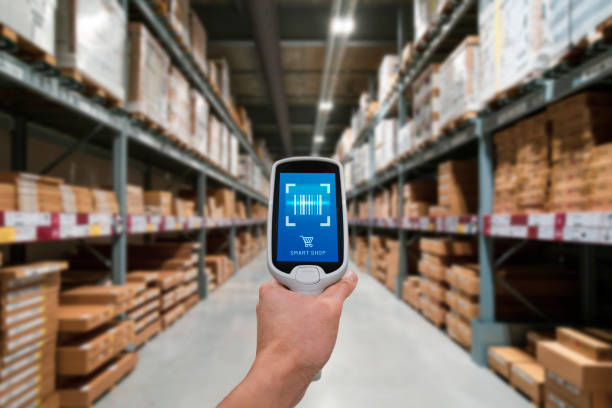
- Large commercial area: Several large Moroccan supermarkets have integrated RFID for the management of their inventory. Technology allows products to be tracked from storage to sale with increased accuracy. For example, Marjane, a major retailer, uses RFID tags to reduce out-of-stocks and improve the customer experience.
- Clothing chains: Fashion chains, such as H&M Morocco, have adopted RFID to optimize their logistics. RFID helps track items through the various stages of the supply chain, from manufacturing to shelf placement, thereby ensuring effective inventory management.
Logistics Sector
- Transport and Storage: Companies like SNTL (National Company of Transport and Logistics) have implemented RFID systems for warehouse management. This implementation reduced tracking errors, increased processing speed and ensured accurate traceability of goods.
- Port of Tangier Med: Use of RFID for tracking containers in the port. This technology improves the control and security of port operations, reduces container processing times and ensures better management of goods flows.
Health Sector
Moroccan hospitals are starting to use RFID for tracking medical equipment and medications. For example, Sheikh Zaid Hospital in Rabat implemented RFID to manage medication carts, which reduced management time and minimized medication errors.
Manufacturing Sector
Manufacturing companies, such as Yazaki which produces automotive electronic components, use RFID to track parts used in their production. This practice ensures efficient inventory management, minimizes errors and maintains continuous product traceability.
Agricultural Context
Agricultural cooperatives are adopting RFID for livestock and crop management. For example, the COPAG cooperative uses RFID tags to track animal movements, monitor their health and optimize milk production.
Conclusion
RFID has emerged as an essential solution for Moroccan companies wishing to modernize their logistics operations, improve the accuracy of their inventories and optimize their supply chain.
The challenges of implementing RFID in Morocco
The application of RFID (Radio Frequency Identification) technology in the logistics sector in Morocco presents several distinct challenges. Although this technology can increase operational efficiency, improve product traceability and reduce costs, it involves certain obstacles that businesses must overcome.
Cost of technology
RFID integration requires a considerable initial investment. This cost includes:
- Purchasing RFID tags
- Installation of readers and antennas
- The acquisition of management software adapted
Systems Compatibility and Integration
Moroccan companies must ensure that RFID systems are compatible with their existing infrastructure. This includes:
- Integration with inventory and warehouse management systems
- Compatibility with ERP tools already in place
Training and skills
Implementing RFID requires a skilled workforce. It is therefore essential to:
- Train employees on the use of readers and tags
- Recruit RFID experts to manage and maintain the system
Standards and regulations
Businesses must comply with local and international regulations regarding the use of RFID. This includes:
- Compliance with radio frequency standards
- Compliance with data privacy and security regulations
Resistance to change
There is often internal resistance to implementing new technologies. To overcome this, it is necessary to:
- Educate employees about the benefits of RFID
- Facilitate the transition through organizational change programs
Environment and local infrastructure
Morocco has certain infrastructural constraints that can affect the effectiveness of RFID, such as:
- Variabilities in the quality of internet connections
- Limitations in terms of electrical energy and network coverage
Maintenance and technical support
RFID systems require ongoing technical support to optimize their effectiveness. It is essential to:
- Set up maintenance contracts with reliable suppliers
- Have rapid intervention panels in the event of a breakdown
In summary, although RFID offers many advantages for logistics in Morocco, its implementation involves challenges. Rigorous planning and effective management of these obstacles make it possible to maximize the benefits of this technology.
The future of RFID in Moroccan logistics: Perspectives and trends
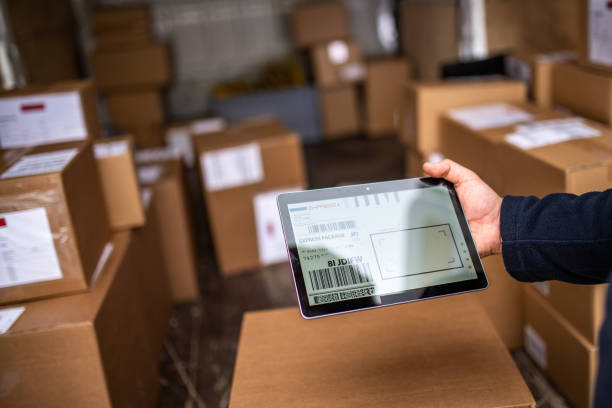
The use of RFID (Radio Frequency Identification) technology in the logistics sector in Morocco is expanding rapidly. Several factors contribute to this growth and shape the future trends of this essential technology.
Growth Factors
- Infrastructure modernization : The Moroccan government is investing heavily in improving logistics infrastructure, facilitating the adoption of advanced technologies like RFID.
- Growing demand : The e-commerce boom has led to increased demand for more efficient and transparent logistics solutions.
- Government initiatives : Support programs and tax incentives are in place to encourage automation and RFID integration.
Main Trends
- Integration with AI and IoT: The future of RFID in Morocco will be marked by increased integration with Artificial Intelligence (AI) and Internet of Things (IoT) technologies. This will not only allow finer inventory management, but also more precise forecasts.
- Automated supply chains : RFID will facilitate the complete automation of supply chains, significantly increasing inventory accuracy and reducing processing times.
- Sustainability and energy efficiency : The use of RFID contributes to better resource management and waste reduction, aligning logistics practices with sustainable development goals.
Challenges to Overcome
- Initial cost : The initial investment for setting up RFID systems remains a barrier for certain companies, particularly SMEs.
- Training and skills : There is a need to train staff to maximize the benefits of RFID, which requires additional investment.
- Data security : The protection of information collected via RFID against cyberattacks and fraudulent use remains a crucial issue.
Future Outlook
The potential of RFID in Moroccan logistics is immense and promises substantial gains in competitiveness. Companies that adopt these technologies early will be best positioned to take advantage of the supply chain optimization and strategic advantages that RFID offers.
In the field of logistics, RFID technology is revolutionizing operations management. By offering precise inventory tracking and process optimization, it allows Moroccan companies to remain competitive in a constantly evolving market. If you would like to learn more about the benefits of RFID for your logistics activities, visit our site today!