
Introduction to archives management in Morocco
Archives management in Morocco is an essential area for heritage preservation and administrative efficiency. It involves unique challenges due to evolving technologies and organizational needs.
History and evolution
- Precolonial period : The documents were mainly stored in libraries and religious institutions.
- Colonial era : The French administration has introduced new methods of classification and conservation of archives.
- Post-independence : The Kingdom has put in place more modernized structures to manage national archives.
Current issues
Records managers must navigate between maintaining traditional physical records and the increasing integration of digital solutions.
- Preservation of physical records : Importance of preserving historical documents, often fragile, in optimal conditions.
- Digital transition : Need to digitize documents for easy access, ensuring data security and integrity.
Technology and innovation
Technological advances offer powerful tools to improve archive management, such as:
- Electronic document management (EDM) systems : Facilitate the storage, search and management of digital information.
- Cloud storage solutions : Allow remote access and secure data backup.
- Scanning software : Help convert physical archives into digital formats while preserving their fidelity.
Standards and regulations
Compliance with local and international standards is essential for effective records management:
- ISO standards : International standards for document management that ensure quality and security.
- Moroccan legislation : Legal framework regulating the management of public and private archives, including access and confidentiality rights.
Training and skills
Archiving professionals in Morocco must develop varied skills to meet the requirements of the profession:
- Technical skills : Mastery of digital tools and conservation methods.
- Legal knowledge : Understanding of laws and regulations relating to archives.
- Project management : Ability to manage digitization projects and coordinate teams.
Challenges and perspectives
Archives management in Morocco, although complex, shows promising prospects thanks to the increasing adoption of innovative technologies and the continuing training of professionals.
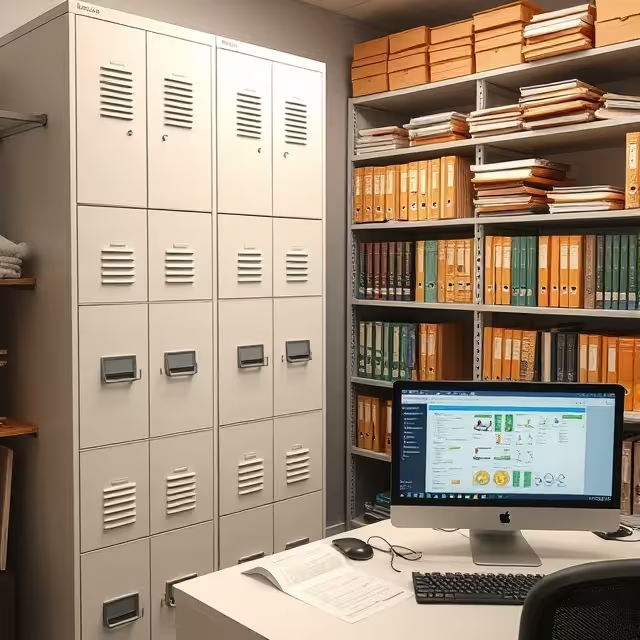
The challenges of managing physical records
The management of physical archives in Morocco presents several major challenges that must be overcome to ensure effective preservation of documents. These include:
Limited storage space
- Physical archives require considerable storage space, which is often scarce and expensive.
- Institutions must invest in infrastructure adapted to accommodate these volumes.
Conservation and preservation
- Physical documents are sensitive to environmental conditions such as humidity, light and temperature.
- It is necessary to adopt preventive conservation measures to avoid deterioration of documents.
- Specific archival materials, such as acid-free boxes, are required to preserve records.
Organization and access
- The classification of physical archives must be rigorous to ensure easy and rapid access.
- An effective physical records management system requires qualified and trained personnel, which can represent an additional cost.
Security and Privacy
- Archives often contain sensitive information that must be protected against theft, loss or unauthorized access.
- Solutions include surveillance, access control systems and strict document management procedures.
Maintenance costs
- Managing physical archives involves ongoing maintenance costs, including costs for personnel, premises and conservation materials.
- Institutions often have to balance these expenses with their limited budgets.
Partial dematerialization of archives
- The transition to hybrid records management, combining physical and digital, can pose challenges.
- Digitization requires technological investments and training of staff in the use of new IT skills.
Compliance with standards and regulations
- It is crucial to comply with national and international archiving regulations.
- Regular updates of archiving policies to comply with new laws are necessary.
Summarizing the main challenges, it becomes clear that managing physical records is a complex task requiring adequate resources and careful planning.
Benefits of digitizing archives
The digitization of archives offers many advantages for efficient and modern document management. Here are some of the main benefits:
- Ease of access : Digitization allows quick and easy access to archived documents, regardless of their age or original format. All it takes is a simple digital search to find a file.
- Space saving : Converting paper documents to digital files significantly reduces the physical space needed to store archives. Overcrowded shelves and rooms full of documents become redundant.
- Increased protection and security : Digital archives can be protected with advanced security measures such as encryption, passwords and regular backups, reducing the risk of accidental loss, theft or damage.
- Long-term preservation : Digitization helps preserve historical and old documents by converting them into digital formats not subject to physical wear and tear. This guarantees their future preservation.
- Improved search and organization : Digital archives can be organized and indexed much more easily than paper archives, making them easier to manage and search. The added metadata allows for specific and quick searches.
- Simplified sharing : Sending and sharing scanned documents is much simpler and faster than moving paper documents. This allows for more effective collaboration between different departments or even organizations located in various locations.
- Respect for the environment : Reducing the use of paper by digitizing archives contributes to a positive environmental impact by reducing the consumption of natural resources and the production of waste.
- Administrative efficiency : Digitization and the use of electronic document management systems reduce the time and resources required to process documents, thereby enabling improvement in administrative and operational processes.
These advantages show that the digitization of archives is a strategic choice that benefits both the daily management of documents and their long-term preservation. By adopting this approach, Moroccan organizations can modernize their records management methods, while optimizing space, security and efficiency.
Strategies for a successful transition to digital
To successfully transition from physical archives to digital, several strategies must be put in place.
1. Needs and resources assessment:
- Analysis of archive volumes : It is crucial to evaluate the quantity and type of documents to be digitized.
- Identification of available resources : Equipment, personnel and software required for digitization must be identified and allocated.
2. Training and awareness:
- Staff training : It is important to train staff in the use of scanning and electronic document management (EDM) technologies.
- Raising awareness of digital archive management : Staff must be aware of good practices and the issues associated with digital archives.
3. Implementation of a digitization plan:
- Planning : Develop a realistic schedule for digitizing documents.
- Selection of priority documents : Determine which documents should be digitized as a priority, based on their importance and frequency of use.
4. Adoption of adapted technologies:
- Choice of EDM software : Select efficient software for managing digital archives.
- Using high quality scanner : Invest in scanning equipment adapted to the types of documents to be processed.
5. Implementation of standards and protocols:
- Scanning standards : Adapt international standards to ensure the quality and sustainability of digital archives.
- Security protocols : Establish processes to guarantee the security and confidentiality of digitized documents.
6. Conservation and accessibility:
- Regular backup : Implement backup systems to prevent data loss.
- Accessibility : Ensure the availability and accessibility of archives for authorized users.
Finally, it is essential to:
7. Continuous information and evaluation:
- Regular audits : Carry out audits to monitor the effectiveness of the digital archives management system.
- Updating technologies and skills : Continuously adapt and train staff to new technologies.
These strategies will help ensure a successful transition to digital, ensuring the efficiency and long-term viability of the records management system.
Tools and technologies for digital archives management
With the rise of digital technology, archives management in Morocco is undergoing a significant transformation. Several tools and technologies are used to ensure effective management of digital archives.
- Document Management Systems (DMS) :
- This software allows the storage, search and management of digital documents.
- They offer features like version control, change tracking, and access permission management.
- Scanning Solutions :
- These technologies allow physical documents to be converted into digital files.
- They include high-quality scanners and OCR (optical character recognition) software to extract textual information.
- Cloud computing :
- Enables secure and accessible storage of digital archives.
- Facilitates collaboration and information sharing in real time.
- Offers automatic data backup and recovery options.
- Archives management software (LMS) :
- Specially designed for archives management, they integrate advanced cataloging, search and tracking functionalities.
- They ensure that records are stored in a manner that complies with archaeological regulations and standards.
- Blockchain :
- Used to guarantee the authenticity and integrity of digital documents.
- Each modification is recorded in an immutable register, offering complete traceability.
- Artificial Intelligence (AI) and Machine Learning :
- These technologies optimize the classification and organization of archives.
- They facilitate the extraction and analysis of relevant data, thus improving the efficiency of document management.
Additionally, records management systems must be tailored to the specific needs of organizations. They must also ensure the security of confidential information and comply with data protection laws. The integration of these technologies not only facilitates access to archives but also extends their lifespan, while offering an adapted response to contemporary challenges linked to information management.
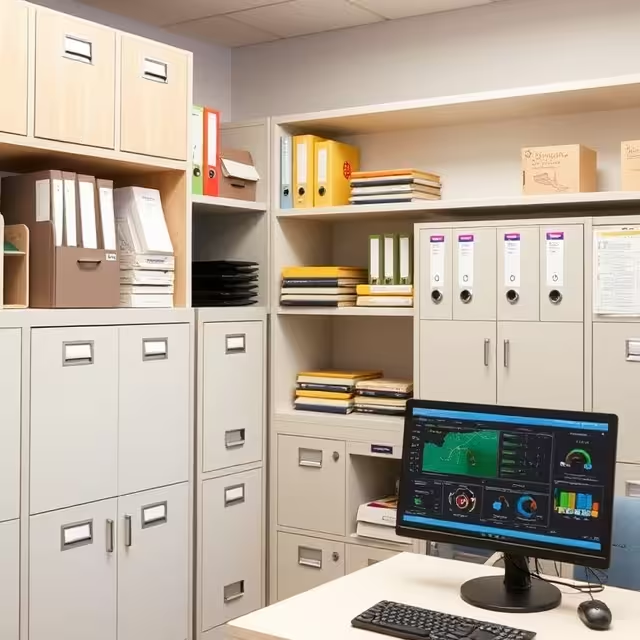
Case studies: Successes and failures in Morocco
The case studies illustrate the challenges and successes encountered by Moroccan organizations in the management of physical and digital archives.
The success of the National Institute of Statistics
The National Institute of Statistics has integrated an electronic document management (EDM) system coupled with physical archiving. The keys to their success include:
- Massive digitization
- More than 1 million paper documents have been digitized
- Noticeable reduction in storage space
- Increased accessibility
- Documents can be viewed online by employees
- Establishment of an effective classification system
The failure of a local community
Conversely, a local authority in a rural area encountered significant difficulties due to a lack of planning and resources.
- Poor management of digitalization
- Digitization projects abandoned due to lack of funding
- Unresolved technical issues
- Insufficiently trained team
- Inadequate or no training on using the new system
- Resistance to change among staff
The moderate success of a large private company
A large private company based in Casablanca has succeeded in establishing a balance between physical and digital archives, although challenges remain.
- Strategic planning
- Adequacy of allocated resources
- A strategy gradually implemented over five years
- Persistent issues
- Some departments remain reluctant to adopt digital systems
- Need to improve continuing education
The case of a university institution
A Moroccan university also experienced mixed results. The initial strategy, despite some notable successes, had to be adjusted.
- Elements of success
- Digitization of research work and theses
- Simplified online access for students and staff
- Pitfalls encountered
- Lack of system updates
- High costs in technical maintenance and logistical support
These case studies offer valuable lessons on the need for rigorous planning, adequate resource allocation and the involvement of all hierarchical levels to achieve successful integrated management of physical and digital archives.
Recommendations for effective hybrid management
To successfully manage hybrid archives, it is essential to follow certain recommendations in order to maximize the efficiency and accessibility of documents, while ensuring their security.
- Needs assessment
The first step is to assess the specific records management needs:- Types of documents to keep
- Legal and internal retention periods
- Archive access frequency
- Selection of appropriate technologies
Choose reliable scanning and electronic document management technologies:- High resolution scanners
- EDM software (Electronic Document Management)
- Secure storage solutions like the cloud
- Classification and indexing
Implement an efficient classification and indexing system:- Clear categorization of documents
- Use of standardized metadata
- Fast and efficient search tools
- Employee training
Train staff in the use of new tools and technologies:- Regular training sessions
- Access to guides and tutorials
- Technical support available
- Security and Privacy
Ensure the security and confidentiality of documents:- Strict security protocols
- Differentiated access permissions
- Regular monitoring and audit
- Continuity and backup plan
Establish a continuity plan to prevent data loss:- Regular, automated backups
- Storing backup copies in different locations
- Periodic testing of recovery procedures
- Maintenance and updating
Maintain and regularly update management systems:- Performance audits
- Frequent software updates
- Continuous assessment of needs and possible improvements
By following these recommendations, organizations in Morocco can create an environment where hybrid records management is not only possible but also efficient and secure, thus meeting modern document performance requirements.
Conclusion and future prospects for archives management
The harmonious integration of digital and physical archives in Morocco requires a methodical approach and innovative solutions. To align these two archiving methods, several initiatives can be considered:
- Progressive digitization of physical archives : To preserve documentary heritage, institutions can opt for systematic digitization. This task can be carried out step by step to avoid heavy initial investments.
- Training and awareness : Managing digital archives requires specific skills. Archivist training and end-user awareness are essential to ensure efficient and secure document handling.
- Security and Privacy : Archivists must implement rigorous security protocols to protect digital records from cyberattacks. The use of strong encryption and authentication methods is recommended.
- Technological infrastructure : It is crucial to modernize existing infrastructure and invest in advanced technologies, such as electronic document management (EDM) systems, to facilitate access and storage of digital archives.
- Conservation policy : Define clear policies for document retention and destruction to effectively manage storage space and comply with legal and regulatory requirements.
- Raising awareness of the importance of archives : Promoting a culture of archiving among the general public and institutions can help to promote the importance of both physical and digital archives, thus making it possible to preserve the collective memory of Morocco.
The future prospects for archives management in Morocco are promising, provided that administrative rigor, technological innovation, and continuing training are combined. The synergy between physical and digital archives offers a unique opportunity to enhance and preserve documentary heritage for future generations.
In the field of records management, the balance between physical and digital solutions becomes essential in the digital age. Moroccan companies must adopt adapted technologies to optimize their processes and guarantee efficient management. Discover how hybrid archive management solutions can transform your business by combining traditional organization and powerful digital tools. To find out more, visit our site and explore the innovations available!